Reference data configuration process
To define and use the reference data, ensure that you follow the steps in the configuration process.
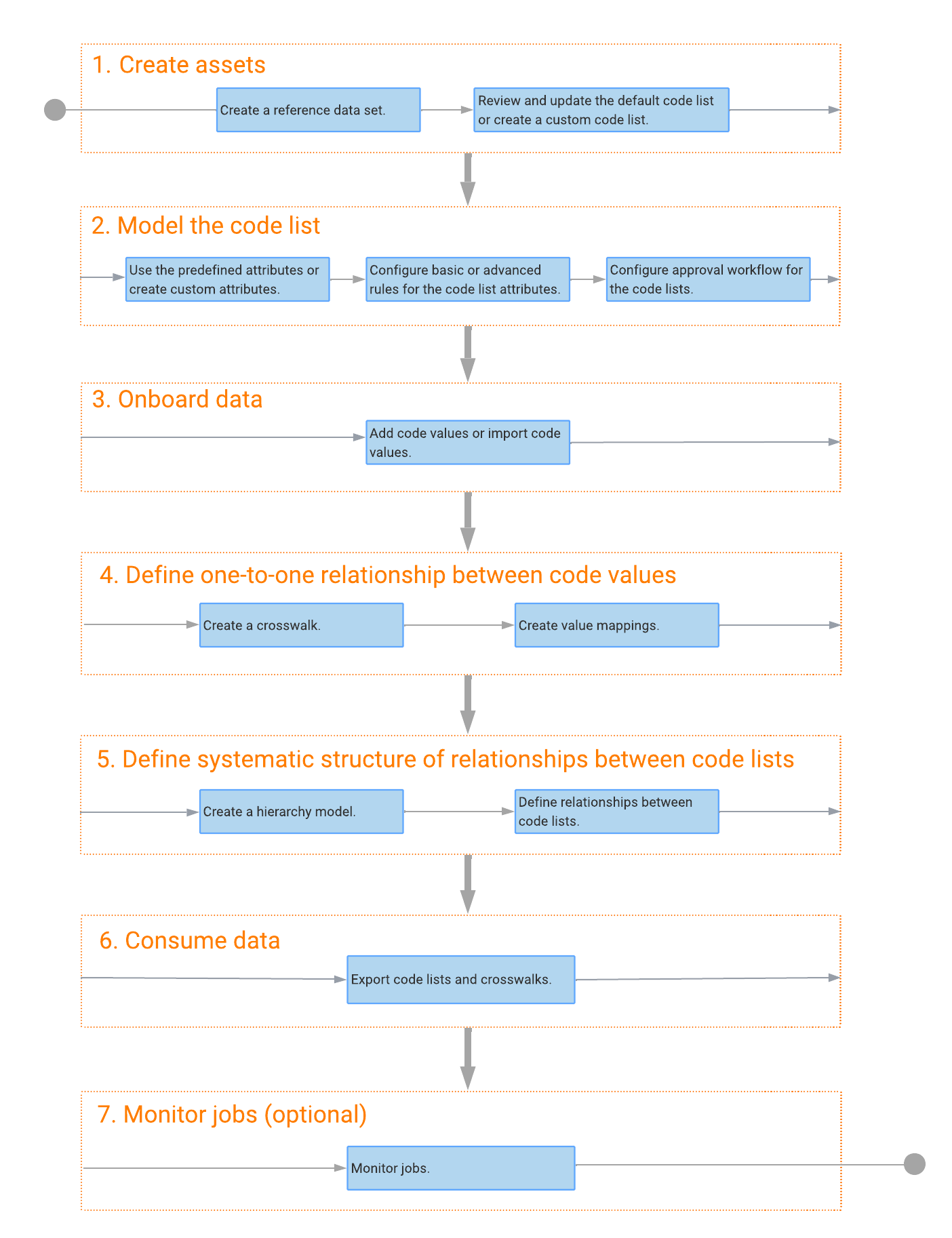
The following image shows the steps in the reference data configuration process:
The following table lists the steps involved in the reference data configuration process:
Step | Sub-steps | Reference Content |
|---|
Step 1. Create assets | - 1Create a reference data set
- 2Review and update the Enterprise code list or create a custom code list
| |
Step 2. Model the code list | - 1Use the predefined attributes or create custom attributes
- 2Configure basic or advanced rules for the code list attributes
- 3Configure approval workflow for the code list
| |
Step 3. Onboard data | Add code values or import code values | |
Step 4. Define one-to-one relationship between code values | - 1Create a crosswalk
- 2Create value mappings
| |
Step 5. Define systematic structure of relationships between code lists | - 1Create a hierarchy model
- 2Define relationships between code lists
| |
Step 6. Consume data | Export code lists and crosswalks | |
Step 7. Monitor jobs (optional) | Monitor jobs | |
Best practices to configure reference data
To configure and use reference data, use the following best practices:
- •Use unique, business-friendly, and descriptive names for reference data assets, and avoid generic names, such as ReferenceDataSet1.
- •Organize reference data sets by application or domain, such as finance or healthcare.
- •Ensure that each code value within a code list is unique.